
Blog
Chinese Taiwanese Naval Standoff: A Deepening Maritime Conflict Shaping Asia’s Future

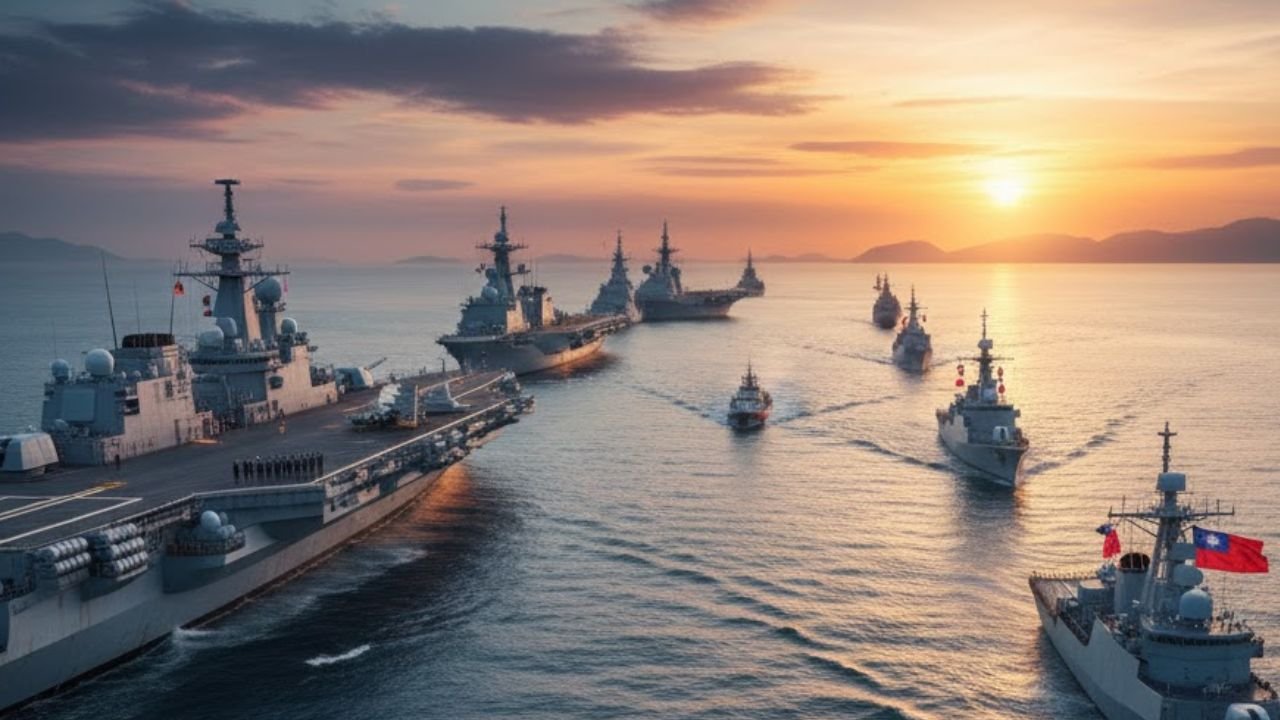
The Chinese Taiwanese Naval Standoff has become one of the most dangerous flashpoints in the world, pulling major powers into a long-running contest over sovereignty, security, and strategic control of the Western Pacific. The confrontation now includes constant military maneuvers, grey-zone tactics, and high-stakes diplomacy involving People’s Republic of China, Taiwan, United States, and Japan. What began as a regional dispute has evolved into a defining struggle shaping the future of the Indo-Pacific.
Understanding the Modern Chinese Taiwanese Naval Standoff
The current naval standoff is part of the ongoing Fourth Taiwan Strait Crisis, which escalated after US Speaker Nancy Pelosi’s visit in 2022. Since then, the People’s Liberation Army has intensified operations across the Strait, abolishing the long-respected median line and normalizing military pressure around the island. This new environment is defined by constant grey-zone warfare, large-scale blockade simulations, and increasingly assertive Chinese rhetoric about reunification.
Historical Roots and Escalating Tensions
The tension between China and Taiwan stretches back to the aftermath of the Chinese Civil War. But the latest phase emerged when Beijing began treating the Taiwan Strait as internal waters. The trend accelerated after Pelosi’s 2022 visit, when China launched its largest set of military drills since 1996. These drills included ballistic missile launches, encirclement maneuvers, and aggressive naval posturing that signaled Beijing’s readiness to pressure the island without committing to full-scale war.
By 2025, the standoff transformed into a sustained confrontation marked by record PLA deployments and elimination of political and military buffers that previously helped maintain stability.
China’s Expanding Military Strategy and Blockade Pressure
China’s approach to the standoff is driven by its goal to isolate Taiwan while discouraging outside interference. The late-2025 exercise “Justice Mission 2025” simulated a multi-point blockade around Taiwan, lasting ten hours and involving live-fire rocket launches into surrounding waters. Intelligence reports documented nearly ninety Chinese naval and coast guard vessels conducting area-denial operations, an unmistakable sign of China’s escalating pressure campaign.
The Eastern Theater Command, which oversees Taiwan-focused operations, expanded its presence by sending aircraft, warships, and rocket units deeper into Taiwan’s immediate maritime zones. In January 2026, a China Coast Guard vessel came within twenty nautical miles of Taiwan’s main island, breaking a long-held threshold and demonstrating Beijing’s intent to erase any remaining informal boundaries.
China aims to control the First Island Chain, positioning assets such as the Shandong aircraft carrier and H-6J naval bombers to prevent outside military intervention, especially from the United States and Japan.
Admiral Tang Hua and the “Anaconda Strategy”
Taiwan’s Navy Commander, Admiral Tang Hua, described China’s pressure campaign as an “Anaconda Strategy”, a slow-strangulation effort designed to weaken Taiwan’s defenses without direct conflict. PLA aircraft crossing the former median line surged dramatically, rising from thirty-six incursions in early 2024 to nearly two hundred by August of the same year.
These constant intrusions force Taiwan to deploy nearly half of its operational fleet just to monitor foreign vessels and aircraft, increasing maintenance burdens and stretching manpower. This slow, grinding pressure is a core element of the Chinese Taiwanese Naval Standoff and keeps Taiwan in a perpetual state of high alert.
Taiwan’s Defense Transformation and Naval Modernization
While China expands its military presence, Taiwan is undergoing its most significant defense overhaul in decades. The government has launched a Light Frigate Program, developing ten modern 2,500–3,000-ton ships designed for anti-air and anti-submarine missions. The domestically built Narwhal-class submarine conducted testing off Kaohsiung in 2026, marking a breakthrough for Taiwan’s naval independence.
Taiwan has also created a Littoral Defense Force, integrating fast attack boats, missile craft, and the Haifeng Brigade, which operates HF-2 and HF-3 anti-ship missiles. The HF-3, with its 400-kilometer range, forms the core of Taiwan’s Decisive Sea Battle doctrine, an asymmetric strategy aimed at deterring superior Chinese forces through precision strikes.
On land, Taiwan continues integrating US-made systems, including the final shipment of M1A2T Abrams tanks, expected in early 2026. Despite internal political disagreements, Taiwan’s modernization efforts reflect a national push to remain resilient in the face of mounting maritime pressure.
United States Support and Strategic Ambiguity
The United States remains Taiwan’s most important security partner. In December 2025, Washington approved a record $11.1 billion arms package, which included HIMARS systems, Altius drones, and Javelin missiles. These weapons significantly strengthen Taiwan’s ability to counter amphibious and blockade threats.
Yet in early 2026, Washington released its National Defense Strategy without explicitly mentioning Taiwan, creating uncertainty among Taiwanese officials. The February 2026 phone call between Donald Trump and Xi Jinping further highlighted the complexity of American policy, as Xi warned the US to act “prudently” regarding arms sales and military involvement.
Japan, the Quad, and the Indo-Pacific Security Network
Japan has grown increasingly concerned as Chinese missiles have landed in its Exclusive Economic Zone. Statements from Japanese officials suggesting possible military involvement in a Taiwan conflict triggered strong protests from Beijing. The situation has widened beyond a bilateral dispute, drawing in countries such as Australia and India through the Quad alliance, which supports a “Free and Open Indo-Pacific.”
Japan’s direct involvement or coordination with the US in the First Island Chain would significantly reshape the Chinese Taiwanese Naval Standoff, turning it into a broader Indo-Pacific security crisis.
Grey-Zone Warfare: The New Normal in the Taiwan Strait
The standoff has evolved into a continuous cycle of grey-zone activities. China regularly deploys coast guard ships, maritime militia vessels, and unannounced naval patrols near Taiwan’s 24-nautical-mile contiguous zone. These operations blur the line between peacetime and conflict, keeping Taiwan under pressure while avoiding outright war.
Taiwan’s response includes counter-patrols, enhanced radar coverage, public readiness drills, and expanded naval deployments. Grey-zone activity now defines the rhythm of the Chinese Taiwanese Naval Standoff and sets the stage for more aggressive actions if tensions continue to rise.
Final Thoughts
The Chinese Taiwanese Naval Standoff is no longer a temporary crisis but a structural conflict shaping the Indo-Pacific’s future. China relies on escalating military pressure, blockade simulations, and grey-zone tactics, while Taiwan strengthens its navy, missile networks, and asymmetric capabilities. The involvement of the United States, Japan, and the broader Indo-Pacific community adds layers of complexity that turn this regional dispute into a global security concern.
As the standoff intensifies, one miscalculation could shift the crisis from strategic pressure to open conflict, making the Taiwan Strait one of the most important geopolitical flashpoints of the decade.
FAQs
What triggered the latest Chinese Taiwanese Naval Standoff?
The standoff accelerated after Pelosi’s 2022 Taiwan visit, which provoked major PLA drills and the abolition of the median line, leading to continuous military pressure.
Why does China focus on blockade simulations instead of invasion?
Beijing prefers slow isolation strategies like the “Anaconda Strategy,” which avoid the risks of a full invasion while still weakening Taiwan.
How is Taiwan responding to China’s military pressure?
Taiwan is modernizing its navy, deploying HF-3 missiles, expanding its submarine fleet, and strengthening coastal defense forces.
What role does the United States play in the standoff?
The United States provides major arms packages, conducts naval operations, and supports Taiwan’s defense development, though its strategic intentions remain ambiguous.
Why is Japan increasingly involved in the Taiwan Strait situation?
Chinese missile activity near Japan and concerns over regional security have pushed Tokyo into a more active role, especially through cooperation with the US and the Quad.


The world of celebrity investing has evolved significantly over the years. While luxury cars, startups, and entertainment ventures continue to attract attention, many celebrities are increasingly turning to rental properties as a reliable source of long-term wealth. Real estate has long been recognized as one of the most stable investment vehicles, offering opportunities for passive income, portfolio diversification, and asset appreciation.
Unlike industries that may fluctuate with market trends, rental properties provide a tangible asset that can generate recurring income while increasing in value over time. For celebrities seeking financial security beyond their entertainment careers, real estate has become an attractive option.
The Appeal of Rental Property Investments
One of the primary reasons celebrities invest in rental properties is the opportunity to create consistent cash flow. Whether they own single-family homes, luxury apartments, or multi-unit developments, rental income can provide a steady revenue stream regardless of industry conditions.
Many high-profile investors understand that successful wealth preservation requires diversification. Rental properties offer protection against market volatility while providing long-term growth potential. As a result, real estate often becomes a cornerstone of a celebrity’s investment portfolio.
In addition to generating income, rental properties can offer tax advantages, equity growth, and opportunities for strategic expansion over time.
Real Estate Offers Long-Term Wealth Building
Property values historically appreciate over the long term, making real estate an effective wealth-building strategy. Celebrities and other investors often acquire properties in growing markets where demand remains strong.
As rental income helps cover mortgage expenses and operating costs, property owners can gradually build equity while benefiting from potential appreciation. This combination of income generation and asset growth makes rental properties attractive for investors focused on long-term financial goals.
The Importance of Professional Property Management
Owning rental properties can be rewarding, but it also comes with responsibilities. From maintenance coordination to tenant communication and lease administration, managing rental properties requires time and expertise.
Professional Property Management services help property owners streamline daily operations while maintaining positive tenant relationships. Experienced property managers oversee essential tasks such as rent collection, maintenance scheduling, lease enforcement, and financial reporting.
For celebrities with demanding schedules and multiple investments, professional management provides peace of mind and allows them to focus on other priorities while ensuring their properties remain profitable and well-maintained.
Why Tenant Screening Matters
A successful rental investment often depends on the quality of the tenants occupying the property. This is why tenant screening remains one of the most important aspects of rental property ownership.
Proper tenant screening helps landlords identify qualified applicants who demonstrate financial responsibility, stable income, and a positive rental history. By evaluating prospective tenants before lease approval, property owners can reduce the likelihood of payment issues, lease violations, and property damage.
Investors who prioritize tenant screening often experience fewer disputes and greater long-term stability within their rental portfolios.
The Value of Professional Tenant Screening Services
As rental portfolios grow, many investors choose to work with professional tenant screening services to improve consistency and accuracy during the application process.
These services typically verify employment, review credit history, conduct background checks, and assess rental references. The goal is to provide property owners with reliable information that supports informed leasing decisions.
For celebrities and large-scale investors managing multiple properties, professional tenant screening services can save time while helping minimize potential risks.
Understanding the Tenant Application Screening Process
A thorough tenant application screening process goes beyond reviewing a completed application form. Property owners and managers often evaluate several factors before approving an applicant.
Common components include:
- Employment verification
- Income verification
- Credit history review
- Rental history evaluation
- Reference checks
- Background screening
Comprehensive tenant application screening helps ensure that prospective renters meet the property’s requirements and can fulfill their lease obligations.
Rental Tenant Screening Helps Protect Investments
Rental tenant screening serves as a proactive risk-management strategy for property owners. Identifying reliable tenants before move-in can significantly reduce costly issues that may arise later.
The screening process for tenants provides valuable insights into an applicant’s financial behavior, rental history, and overall suitability. By making data-driven decisions, investors can improve occupancy quality and protect the long-term performance of their rental assets.
For celebrities managing valuable real estate holdings, effective rental tenant screening is often considered an essential part of preserving both property value and investment returns.
The Future of Celebrity Real Estate Investing
As more celebrities seek stable and scalable investment opportunities, rental properties are expected to remain a popular choice. Real estate offers a unique combination of income generation, asset appreciation, and long-term financial security that few other investments can match.
However, success in rental property ownership requires more than simply acquiring properties. Strategic Property Management, effective tenant screening, and sound operational practices all play critical roles in maximizing returns and minimizing risk.
By approaching real estate with a long-term perspective and leveraging professional expertise when needed, celebrities can continue building sustainable wealth through rental property investments.
Conclusion
The growing interest in rental properties among celebrities reflects a broader understanding of the value of real estate investing. Rental income, portfolio diversification, and long-term appreciation make real estate an attractive option for investors seeking financial stability.
At the same time, successful rental property ownership depends on strong management practices. Professional Property Management solutions, comprehensive tenant screening, and reliable tenant screening services help property owners protect their investments while creating positive experiences for tenants.
As celebrity investors continue expanding their real estate portfolios, these best practices will remain key drivers of long-term success.


CPR certification gives people the skills to respond during emergencies when every second matters. It teaches simple steps that can help protect a life before medical help arrives. Many people choose this training for work, while others do it for personal reasons.
It can be useful at home, in public places, or in the workplace. Learning these skills can also build confidence during stressful moments. CPR certification programs are designed to be practical, easy to follow, and useful in real-life situations.
The sections below cover how these programs support safety and preparedness in everyday life.
Building Confidence During Emergencies
Emergencies can feel overwhelming without the right training. CPR certification helps people stay calm and take action with more confidence. It teaches what to do when someone stops breathing or becomes unresponsive.
Clear steps make it easier to respond without panic. Practice during training helps those actions feel more familiar. This confidence can make a big difference before emergency services arrive.
Learning Practical Life-Saving Skills
CPR programs focus on skills that can be used right away in real situations. Training often includes chest compressions, rescue breathing, and how to respond safely. These are practical lessons that go beyond theory.
Hands-on learning makes it easier to remember what to do under pressure. Repetition also helps improve response time. These simple skills can be valuable in many everyday settings.
Flexible Training Options for Different Schedules
Many CPR certification programs are designed to fit busy schedules. Some people prefer in-person classes while others choose online learning. A helpful option is using resources from programs like https://cprcertificationnow.com, where training can be completed in a way that works with daily responsibilities.
This flexibility makes it easier for more people to access important safety education. It also allows learners to move at a comfortable pace. More access means more people can be prepared to respond in an emergency.
Supporting Workplace Safety
Many jobs require CPR certification because safety is part of the role. It is especially useful in places where employees work closely with the public or with children.
Training helps staff respond quickly while waiting for medical professionals. It can also improve overall workplace emergency planning. A prepared team creates a safer environment for everyone around them, and this is one reason many employers encourage regular certification.
Helping Families Feel More Prepared at Home
CPR skills are useful beyond the workplace. Parents, grandparents, caregivers, and family members often take certification to feel more prepared at home.
Emergencies can happen without warning in everyday situations. Knowing what steps to take can reduce fear during those moments. It can also provide peace of mind for the whole household.
Encouraging Ongoing Safety Awareness
CPR certification often creates stronger awareness around health and safety. People become more mindful of emergency planning after completing training. They may also feel encouraged to refresh their skills over time.
This keeps knowledge current and useful. Safety awareness can spread into homes, schools, workplaces, and communities. The more people trained, the stronger the response during emergencies can be.
Find CPR Certification Programs for Safety and Preparedness
CPR certification programs give people practical skills that support fast action during emergencies. The training is simple, useful, and relevant in many parts of daily life. It helps people feel prepared when unexpected situations happen. It also builds confidence through practice and clear instruction.
Whether for work, home, or personal growth, these programs offer lasting value. Learning CPR is a step toward stronger safety and better preparedness for everyone.
Should you wish to read more, visit our blog. We’ve got more for you!

The rapid growth of AI computing is pushing data center networks into a new stage of development. As enterprises deploy larger GPU clusters and more advanced LLM platforms, network bandwidth has become one of the most important factors affecting AI performance. It is no longer enough to focus only on GPU specifications or model architecture. Without a high-speed, stable, and scalable optical network, AI computing resources cannot be fully utilized.
The 800G DR8 optical module is designed to meet this growing demand. Compared with traditional 100G or 400G connections, 800G DR8 provides much higher bandwidth capacity for modern data center environments. It is especially suitable for single-mode fiber connections in AI data centers, cloud platforms, and high-performance computing networks. For organizations building large-scale LLM infrastructure, 800G DR8 offers a practical path toward higher network capacity and better long-term scalability.
In LLM training environments, data movement is extremely intensive. Training large language models requires continuous communication between GPU nodes, storage systems, and distributed computing frameworks. Model parameters, gradients, training datasets, and checkpoint files all need to move quickly across the network. If the optical network cannot provide enough bandwidth, the entire AI training process may slow down. This directly reduces GPU utilization and increases operating cost.
800G DR8 helps solve this problem by providing high-speed single-mode connectivity for critical links inside the data center. It can be used for switch-to-switch connections, high-performance aggregation layers, and large AI cluster interconnects. With 800Gbps transmission capacity, the module helps reduce congestion and provides more bandwidth headroom for future AI workload growth.
For AI inference and TOKEN REQUEST platforms, 800G DR8 is equally important. A modern AI service platform may support multiple LLMs, code generation models, embedding models, image models, and multimodal systems at the same time. Each TOKEN REQUEST may be routed to different backend resources depending on model availability, cost, latency, and user demand. This creates complex traffic flows between API gateways, routing systems, inference servers, databases, storage clusters, and monitoring platforms.
As the number of TOKEN REQUESTS increases, backend networks must handle not only model input and output data, but also logging, billing, authentication, usage tracking, and system health monitoring. 800G DR8 provides the bandwidth needed to support these high-volume AI service environments. It helps platforms process more requests, reduce bottlenecks, and improve service consistency during peak traffic periods.
One of the major advantages of 800G DR8 is its use of single-mode fiber. This makes it suitable for longer and more flexible data center connections compared with short-reach multimode solutions. In large AI computing facilities, GPU clusters, storage zones, and core switching systems may be distributed across different rows, rooms, or buildings. Single-mode 800G connectivity allows operators to design the network with greater flexibility and prepare for future expansion.
800G DR8 also supports a cleaner upgrade path for data centers moving beyond 400G. As AI workloads grow, many operators are looking for ways to increase bandwidth without dramatically increasing cabling complexity. Deploying higher-speed modules such as 800G DR8 allows data centers to carry more traffic per port, improve switching efficiency, and simplify network architecture. This is especially valuable in high-density AI environments where rack space, power, and cooling are limited.
For LLM service providers, network reliability is just as important as raw bandwidth. If the optical link becomes unstable, TOKEN REQUESTS may be delayed, failed, or routed inefficiently. This can affect user experience and increase system retry rates. A stable 800G DR8 deployment helps ensure that model access, response delivery, and token usage records remain consistent across the infrastructure.
As AI moves from experimental deployment to large-scale commercial operation, data center networks must be designed for both performance and reliability. 800G DR8 optical modules provide the high bandwidth, single-mode transmission capability, and scalability needed for advanced AI computing environments.
In summary, 800G DR8 is a strong choice for AI data centers that need higher bandwidth and flexible single-mode connectivity. It supports LLM training, AI inference, distributed GPU clusters, and large-scale TOKEN REQUEST processing. For enterprises and service providers preparing for the next generation of AI infrastructure, 800G DR8 offers a powerful foundation for scalable, efficient, and reliable network growth.

Do Breitling Watches Need a Watch Winder? A Complete Owner’s Guide

Why SSD Data Recovery Requires Specialist Expertise: A UK Guide

Abu Dhabi City Tour

Who is Cuppy Enders? The Untold Story of Tommy Shaw’s First Wife

Who Is Sylvia Dale? Learn About The Wife of Johnnie Cochran

Scalable Industrial Solutions with Smart Design Systems & Financial Precision
-
Celebrity8 months ago
Who is Cuppy Enders? The Untold Story of Tommy Shaw’s First Wife
-
Celebrity9 months ago
Who Is Sylvia Dale? Learn About The Wife of Johnnie Cochran
-
 Business5 months ago
Scalable Industrial Solutions with Smart Design Systems & Financial Precision
-
 Celebrity12 months ago
Who Is Yeonmi Park’s Husband? Ex-Husband Ezekiel, Marriage, Divorce & Family Facts and More
-
 Celebrity11 months ago
Happy Dad Net Worth: Owners, Revenue & Brand Value
-
 Technology6 months ago
How System Maintenance Tools Improve Computer Performance and Security
-
 Celebrity12 months ago
Will Sonbuchner Wife: Inside Sonny Side’s Love Life & Private Marriage
-
 Celebrity8 months ago
Meet Max Muñiz: The Son of Jennifer Lopez and Marc Anthony