
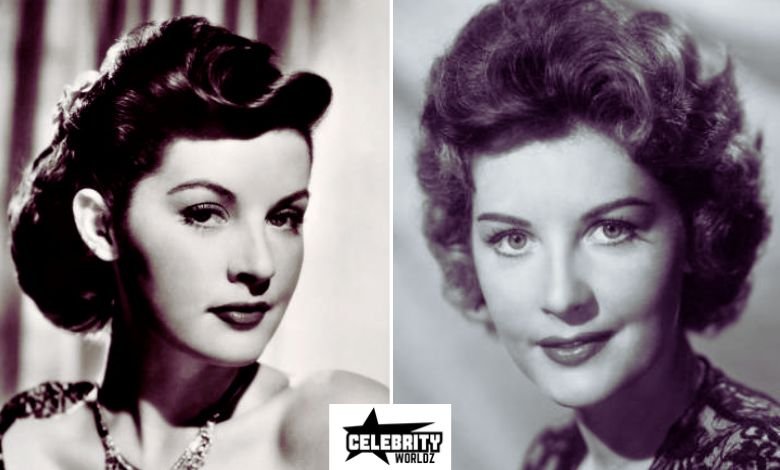
Barbara Bates was an American actress and singer best remembered for her unforgettable final scene in the 1950 classic All About Eve, where her portrayal of the ambitious Phoebe became one of the most iconic moments in Hollywood history. Rising to fame during the 1940s and 50s, Bates embodied the era’s “girl-next-door” charm, yet behind her delicate beauty and on-screen innocence was a private life marked by emotional turmoil, career instability, and lifelong shyness.
- Quick Bio
- Early Life and Family Background
- Education and Early Career Foundations
- Physical Appearance and Personality
- Parents
- Siblings and Extended Family
- Career and Professional Life
- Personal Life and Relationships
- Mental Health, Emotional Struggles, and Privacy
- Media Presence and Public Perception
- Net Worth and Financial Standing
- Later Years and Life in Denver
- Death, Burial, and Aftermath
- Legacy and Influence
- Conclusion
- Frequently Asked Questions (FAQs)
- 1. What is Barbara Bates best known for?
- 2. How did Barbara Bates begin her Hollywood career?
- 3. Why did Barbara Bates’s acting career decline?
- 4. Who were Barbara Bates’s husbands?
- 5. How did Barbara Bates die?
- 6. Did Barbara Bates have any children?
- 7. Where is Barbara Bates buried?
- 8. What were Barbara Bates’s most notable film and TV roles?
From ballet and fashion modeling in her Denver childhood to starring roles in Cheaper by the Dozen, Belles on Their Toes, The Inspector General, and the NBC series It’s a Great Life, her journey blended early success with heartbreaking struggles. Despite a promising career, personal challenges and mental health battles ultimately overshadowed her achievements, leaving her remembered today as one of Golden Age Hollywood’s most tragic yet captivating figures.
Quick Bio
| Category | Details |
|---|---|
| Full Name | Barbara Jane Bates |
| Also Known As | Barbara Jane Reed (married name) |
| Date of Birth | August 6, 1925 |
| Birthplace | Denver, Colorado, USA |
| Date of Death | March 18, 1969 |
| Age at Death | 43 years old |
| Place of Death | Denver, Colorado, USA |
| Cause of Death | Suicide (carbon monoxide poisoning) |
| Resting Place | Crown Hill Cemetery, Wheat Ridge, Colorado |
| Nationality | American |
| Ethnicity | White / Caucasian |
| Parents | Arthur W. Bates (father), Eva I. Frisch Bates (mother) |
| Siblings | Eldest of three daughters |
| Height | 5 ft 4 in (1.63 m) |
| Occupation | Actress, Singer, Model, Ballet Dancer |
| Years Active | 1945–1962 |
| Famous For | Phoebe in All About Eve (1950) |
| Other Notable Works | Cheaper by the Dozen, Belles on Their Toes, The Inspector General, It’s a Great Life |
| Marital Status | Married twice |
| Spouses | Cecil Coan (1945–1967), William Reed (1968–1969) |
| Children | None; had stepchildren via first marriage |
| Personality Traits | Shy, sensitive, emotionally fragile |
| Appearance | Blue eyes, girl-next-door look, demure |
| Income Sources | Acting roles, modeling, later clerical and hospital work |
| Final Occupations | Secretary, dental assistant, hospital aide |
Early Life and Family Background
Barbara Jane Bates was born on August 6, 1925, in Denver, Colorado, the eldest of three daughters in a working-class family. Her father, Arthur W. Bates, worked as a postal clerk, while her mother, Eva I. Frisch Bates, was a registered nurse. Raised in a modest and loving home, Bates grew up a shy and sensitive child, often retreating into the disciplined world of ballet. Her mother enrolled her in dance training early, hoping it would build her confidence and social ease.
By her teenage years, Bates began modeling for local fashion outlets, her soft features and wholesome appeal quickly drawing attention. Yet she remained as reserved as ever. Her big break came when she entered—and won—a Denver beauty contest, a decision she agreed to only after much persuasion. The contest prize, two train tickets to Hollywood, became the turning point of her life. What began as a small adventure transformed into the start of a Hollywood dream that would shape the next two decades of her life.
READ MORE: Vida Guerra: Cuban-American Model, Actress, Age, Height, Career & Net Worth
Education and Early Career Foundations
Bates completed high school in Denver, where her strongest interests were dance, performance, and visual presentation. While she did not pursue formal college education, her formative years were spent perfecting her ballet technique and gaining early experience in modeling. These skills became the foundation of her work in front of the camera.
After arriving in Hollywood at nineteen, her quiet demeanor and natural beauty impressed talent scouts. She soon signed a contract with Universal Pictures, beginning with bit roles and small walk-on parts. These early experiences helped her understand on-set structure, studio expectations, and the highly competitive world of film.
Later in life, after her acting career declined, Bates enrolled in secretarial school, a practical step she took in the mid-1960s during her return to Denver. It reflected both her grounded personality and her attempt to rebuild stability outside Hollywood.
Physical Appearance and Personality
Barbara Bates was often described as the epitome of the “girl-next-door” ideal. Standing at 5 feet 4 inches, she had delicate features, expressive blue eyes, and a soft voice that suited the ingénue roles she frequently played. Her beauty was understated yet striking—more gentle than glamorous, more relatable than untouchable.
But behind that sweetness lay a deeply shy, emotionally fragile young woman. Her colleagues often remarked on her sensitivity and quiet demeanor. While she could portray confidence and charm on screen, off-screen she battled severe insecurity, anxiety, and depression. Her personality—gentle yet troubled—was both her appeal and, tragically, the reason Hollywood’s pressures weighed so heavily on her.
Parents
Father: Arthur W. Bates
A dedicated postal clerk, Arthur provided stability and structure to the household. His steady work ethic influenced Barbara’s early values, though little is documented about their personal relationship.
Mother: Eva I. Frisch Bates
A registered nurse, Eva played a formative role in Barbara’s artistic development. She encouraged her shy daughter to study ballet and supported her modeling efforts. In Barbara’s final years, Eva became a central figure once again, caring for her as she struggled with depression. It was in her mother’s garage that Barbara’s life tragically ended.
Siblings and Extended Family
As the eldest of three daughters, Bates often felt pressure to be the responsible one. Her two younger sisters looked up to her talent and beauty, though Barbara’s Hollywood life created distance from her family. Through her marriage to Cecil Coan, she also became a stepmother to his four children, though she never had any biological children of her own.
Career and Professional Life
Hollywood Beginnings
After signing with Universal Pictures in the mid-1940s, Bates began her career with small, often uncredited roles. Her combination of ballet training, modeling experience, and innate camera presence helped her secure a stronger footing in the studio system.
Rise to Fame
Her real breakthrough came after joining Warner Bros., where she was promoted as a wholesome, all-American “bobby-soxer” ingénue. Roles opposite major stars such as Bette Davis in June Bride and Danny Kaye in The Inspector General further elevated her profile.
But her most memorable role came when 20th Century-Fox cast her as Phoebe in All About Eve (1950). Though her screen time was short, her electrifying final scene—where she stands before a three-way mirror holding Eve Harrington’s award—became instantly iconic. Critics hailed the moment as a brilliant representation of Hollywood ambition, and Bates appeared poised for major stardom.
Major Film Roles
Her success continued with roles in beloved family films like Cheaper by the Dozen and its sequel Belles on Their Toes, where she played Ernestine Gilbreth. She also starred in The Caddy, Rhapsody, Let’s Make It Legal, and The Outcasts of Poker Flat, proving her versatility as both a comedic and dramatic actress.
Television Success
Bates transitioned to television with her role as Cathy “Katy” Morgan in the NBC sitcom It’s a Great Life. The series gave her steady work and broadened her audience, but emotional instability eventually caused friction on set. After 26 episodes, she was written out of the show.
Career Decline
Seeking new opportunities, Bates traveled to England and signed with the Rank Organisation. However, her worsening depression made it difficult to maintain consistency, leading her to be replaced in multiple roles. The Rank contract was canceled, and her trajectory shifted downward.
Her final film role came in Apache Territory (1958), and her last television appearance was in a 1962 episode of The Saint starring Roger Moore. By then, Hollywood had quietly moved on without her.
Personal Life and Relationships
First Marriage to Cecil Coan
Bates met Cecil Coan during her early Hollywood visit. Coan, a United Artists publicist, was more than twenty years older and married with four children. Still, he became both her mentor and later her husband. He left his wife to marry Barbara in March 1945, and for many years he was her closest emotional anchor. His support shaped her professional decisions, and his guidance was often described as controlling or “Svengali-like.”
Coan’s diagnosis with cancer in the mid-1960s devastated Bates. She cared for him until his death in January 1967, a loss from which she never recovered.
Second Marriage to William Reed
In December 1968, she married William Reed, a childhood friend and sports broadcaster. Though the marriage offered a brief sense of companionship, Bates remained emotionally unstable and unable to overcome her long-standing struggles.
Mental Health, Emotional Struggles, and Privacy
Bates’s life behind the scenes was marked by lifelong anxiety and deep depression. Hollywood’s demands intensified her insecurities, leading to mood swings, panic, and breakdowns that cost her major opportunities. She was let go from productions, replaced in films, and even dismissed from television work due to her emotional unpredictability.
After Coan’s death, her decline accelerated. She withdrew from public life, returned to Denver, and took on jobs far from the glamour of Hollywood, working as a secretary, dental assistant, and hospital aide. These were periods of isolation, reflection, and quiet suffering. Despite her attempt at rebuilding a simple life, her mental health continued to deteriorate.
Media Presence and Public Perception
In her prime, Bates was seen as a fresh-faced starlet with understated charm. Critics admired her subtle performances, especially her ability to convey vulnerability and tension. Yet public perception shifted as her career faded. By the time she returned to Denver, she had virtually disappeared from the entertainment spotlight.
Today, film historians regard her as a symbol of unfulfilled potential—an actress who dazzled in brief moments but struggled to endure Hollywood’s unforgiving system.
Net Worth and Financial Standing
During her acting years, Bates earned a respectable income from films and television, though she never reached the highest salary tiers of her era. Her later years brought financial challenges, and she supported herself through clerical and caretaker roles. She had no significant estate at the time of her death, reflecting the dramatic contrast between her early fame and later obscurity.
Later Years and Life in Denver
After leaving the entertainment industry, Bates attempted to build a new life away from the pressures of Hollywood. Denver provided familiarity and comfort, yet also a reminder of how far she had fallen from her once-promising career. Her jobs in hospitals and offices demonstrated resilience, but she was unable to escape her deepening depression.
Her marriage to William Reed offered companionship but not emotional recovery. The weight of grief, past career disappointments, and mental health struggles proved overwhelming.
Death, Burial, and Aftermath
On March 18, 1969, at age 43, Barbara Bates died by suicide through carbon monoxide poisoning in her mother’s garage in Denver. She was discovered by her mother, ending a story marked by brilliance, heartbreak, and enduring questions about Hollywood’s role in shaping—and shattering—young talent.
She was laid to rest at Crown Hill Cemetery in Wheat Ridge, Colorado, in a family plot marked by the quiet dignity her life rarely afforded her.
Legacy and Influence
Though her career was short and often overshadowed by personal turmoil, Barbara Bates remains an unforgettable figure in Hollywood history. Her scene in All About Eve continues to be studied and admired, a haunting and perfect metaphor for ambition, identity, and the cyclical nature of fame.
Film historians and fans of classic cinema recognize her as a performer of rare subtlety, capable of revealing complex emotions with minimal dialogue. Her story also serves as a poignant reminder of the pressures faced by actresses during Hollywood’s Golden Age, many of whom suffered silently behind glamorous façades.
Today, she is remembered as a woman of remarkable talent whose life reflects both the enchantment and the darkness of early Hollywood.
Conclusion
The story of Barbara Bates is one of beauty, talent, vulnerability, and profound tragedy. From a shy Denver girl with ballet dreams to a rising Hollywood star, she experienced extraordinary highs and devastating lows. Her unforgettable presence in All About Eve cemented her place in film history, but her quiet suffering and early death underscore the human cost often hidden behind the silver screen. Though forgotten by many, Barbara Bates stands as a powerful symbol of both the allure and the shadows of Golden Age Hollywood.
READ MORE: Who Is Stephen Barlow? Joanna Lumley’s Husband and Acclaimed British Conductor
Frequently Asked Questions (FAQs)
1. What is Barbara Bates best known for?
Barbara Bates is best known for her unforgettable performance as Phoebe in the final scene of All About Eve (1950), a moment widely regarded as one of the most iconic endings in cinematic history.
2. How did Barbara Bates begin her Hollywood career?
She began as a ballet dancer and fashion model in Denver, later winning a beauty contest that sent her to Hollywood. At 19, she signed with Universal Pictures and slowly built her acting career through small roles.
3. Why did Barbara Bates’s acting career decline?
Her career declined due to severe depression, emotional instability, and anxiety, which caused her to lose major roles, be dropped from contracts, and ultimately withdraw from Hollywood entirely.
4. Who were Barbara Bates’s husbands?
She married United Artists publicist Cecil Coan in 1945; after his death in 1967, she married her childhood friend, sportscaster William Reed, in 1968.
5. How did Barbara Bates die?
Barbara Bates died by suicide on March 18, 1969, in her mother’s garage in Denver, Colorado, due to carbon monoxide poisoning after years of emotional struggles and personal loss.
6. Did Barbara Bates have any children?
No, Barbara Bates did not have biological children, though she gained stepchildren through her marriage to Cecil Coan.
7. Where is Barbara Bates buried?
She is buried at Crown Hill Cemetery in Wheat Ridge, Colorado, where she rests alongside her family.
8. What were Barbara Bates’s most notable film and TV roles?
Her most notable roles include All About Eve, Cheaper by the Dozen, Belles on Their Toes, The Inspector General, The Caddy, and the sitcom It’s a Great Life.