

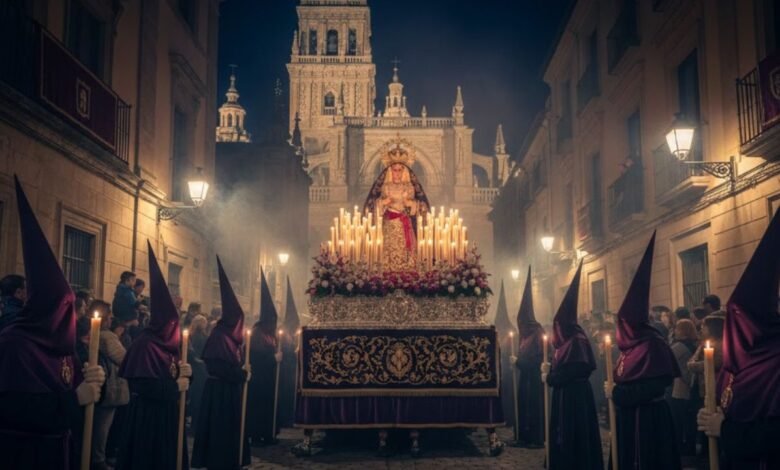
Semana Santa 2025, observed from April 13 to April 20, stands at the heart of the Christian liturgical calendar. Known in English as Holy Week, it commemorates the Passion, Death, and Resurrection of Jesus Christ. Yet beyond theology, Semana Santa 2025 represents living history. It is faith expressed through art, music, silence, and movement.
- Historical Foundations of Semana Santa
- Key Organizations and Cultural Institutions
- The Theological Timeline of Semana Santa 2025
- Iconic Symbols and Religious Characters
- Pasos and Processions: Engineering and Artistry
- Regional Expressions in Spain
- Semana Santa 2025 Across Latin America
- Unique Global Traditions
- Culinary Traditions of Holy Week
- Travel and Practical Planning for Semana Santa 2025
- Final Thoughts: The Enduring Spirit of Semana Santa 2025
- FAQs
Across Spain, Latin America, and many parts of Europe and Asia, streets transform into sacred spaces. Massive floats glide slowly through candlelit crowds. Penitents walk barefoot in reflection. Families gather with quiet reverence. Semana Santa 2025 is not just remembered. It is experienced.
Historical Foundations of Semana Santa
The origins of Semana Santa trace back to medieval Europe. Brotherhoods, known as cofradías or hermandades, began organizing public expressions of devotion. In 1521, Marqués de Tarifa introduced the Via Crucis to Spain after returning from Jerusalem. This act shaped centuries of devotional practice.
In 1604, Cardinal Fernando Niño de Guevara established the first structured procession in Seville. He formalized the Carrera Oficial, a designated route still used today. During the Baroque period, sculptural masters such as Juan Martínez Montañés, Gregorio Fernández, and Francisco Salzillo created religious images that remain central to Holy Week processions.
Despite interruptions like the Spanish Civil War, Semana Santa endured. Its traditions evolved but never disappeared. That resilience defines Semana Santa 2025.
Key Organizations and Cultural Institutions
At the center of Semana Santa 2025 are the brotherhoods. These lay religious associations finance, organize, and maintain the processions year-round. The Cofradía de la Macarena in Seville honors the Virgin of Hope and draws immense devotion. In Málaga, El Mena is deeply connected to the Spanish Legion, whose members carry the float on Holy Thursday.
International recognition has strengthened these traditions. The European Network of Holy Week and Easter Celebrations, established in 2019, promotes cultural preservation. UNESCO has also recognized several traditions as Intangible Cultural Heritage, including Guatemala’s Holy Week in 2022 and the processions of Popayán, Colombia, in 2009.
The Theological Timeline of Semana Santa 2025
Palm Sunday
Semana Santa 2025 begins on April 13 with Palm Sunday. Churches bless palm branches, recalling Jesus’ entry into Jerusalem.
Holy Monday to Wednesday
These days reflect on Christ’s teachings and the betrayal of Judas, often called Spy Wednesday.
Maundy Thursday
On April 17, Maundy Thursday commemorates the Last Supper. Many churches reenact the washing of the feet, symbolizing humility.
Good Friday
April 18 marks the crucifixion. No Mass is celebrated. Instead, believers participate in the Stations of the Cross.
Holy Saturday and Easter Sunday
Holy Saturday is quiet and contemplative. After sunset, the Easter Vigil begins with the lighting of the Paschal candle. On April 20, Easter Sunday celebrates the Resurrection. In Rome, the Pope delivers the Urbi et Orbi blessing.
Iconic Symbols and Religious Characters
Semana Santa 2025 features recurring biblical figures beyond Jesus and Mary. Veronica appears holding a cloth bearing Christ’s image. The Three Marys, Mary Magdalene, Mary of Clopas, and Mary Salome, accompany scenes of sorrow. Pontius Pilate and Roman soldiers appear in dramatic reenactments.
Nazarenos wear pointed hoods called capirotes. Originally linked to the Spanish Inquisition, these hoods later became symbols of humility and voluntary penance. Women often wear mantillas with peinetas during solemn processions.
Pasos and Processions: Engineering and Artistry
The visual heart of Semana Santa 2025 lies in its pasos. These floats weigh between 1,000 and 5,000 kilograms. In cities like Málaga, more than 250 costaleros may carry a single trono. In Seville, the bearers remain hidden, creating the illusion that the sculpture walks on its own.
Processions can last up to fourteen hours. Some participants walk barefoot or wear chains as acts of penance. Marching bands play solemn music, while saetas rise spontaneously from balconies in Andalusia, filling the night with emotion.
Regional Expressions in Spain
Seville remains the most famous destination. La Madrugá features overnight processions led by revered brotherhoods. Málaga stands out for its military presence and the historic tradition of releasing a prisoner on Good Friday. Zamora is known for austere silence and its early morning Drunken Procession. Murcia and Lorca display embroidered floats and theatrical biblical scenes.
Each city expresses the same faith in a distinct cultural voice.
Semana Santa 2025 Across Latin America
In Antigua, Guatemala, vibrant alfombras made of colored sawdust cover entire streets. These intricate carpets are ceremonially destroyed as heavy floats pass over them. UNESCO recognized Guatemala’s Holy Week for blending colonial and indigenous traditions.
In Mexico, Iztapalapa hosts one of the world’s largest Passion Plays, attracting millions. Taxco is known for dramatic acts of penance. Easter Sunday often includes the Burning of Judas, where symbolic figures explode with fireworks.
Popayán in Colombia preserves centuries-old sculptures, while Paraguay observes the Ruta de las 7 Iglesias and shares traditional chipa bread.
Unique Global Traditions
Holy Week extends far beyond Spain and Latin America. In the Philippines, the Traslación of the Black Nazarene recently drew over 7.5 million devotees in a procession lasting nearly 31 hours. In Verges, Spain, the Dance of Death features participants dressed as skeletons. In Bessières, France, cooks prepare a giant omelet using 15,000 eggs. Poland celebrates Śmigus-Dyngus with joyful water battles on Easter Monday.
These customs show how Semana Santa 2025 connects cultures worldwide.
Culinary Traditions of Holy Week
Food reflects faith during Semana Santa 2025. In Spain, torrijas provide energy during fasting. Ecuador prepares fanesca, a soup with twelve grains representing the apostles. In Germany, Gründonnerstag encourages green dishes such as seven-herb soup.
These meals blend symbolism with family tradition.
Travel and Practical Planning for Semana Santa 2025
Holy Week is peak travel season. Cities like Seville and Málaga require early bookings. Weather plays a crucial role. Even light rain can cancel processions to protect wooden sculptures.
Visitors should dress respectfully and observe silence during solemn moments. Good Friday is a public holiday in countries including Spain, Mexico, and Australia.
Final Thoughts: The Enduring Spirit of Semana Santa 2025
Semana Santa 2025 remains a powerful reminder of faith, heritage, and unity. Its processions are not performances but living rituals shaped by centuries of devotion. From Seville’s candlelit streets to Guatemala’s colorful carpets, the message is consistent.
Sacrifice leads to hope. Silence gives way to joy. Semana Santa 2025 connects past and present in a shared human experience.
FAQs
What are the dates of Semana Santa 2025?
Semana Santa 2025 runs from April 13 to April 20.
Why does the date change every year?
It follows the lunar calendar and is tied to the timing of Easter Sunday.
Which country has the most famous Holy Week celebrations?
Spain, particularly Seville and Málaga, is widely known for its elaborate processions.
What is the purpose of the capirote hood?
It symbolizes humility and anonymity during acts of penance.
Is Semana Santa recognized internationally?
Yes, several traditions are protected under UNESCO Intangible Cultural Heritage status.