
A Look At Mike Mentzer Workout Routine, Height, Net Worth, Training Style & Legacy

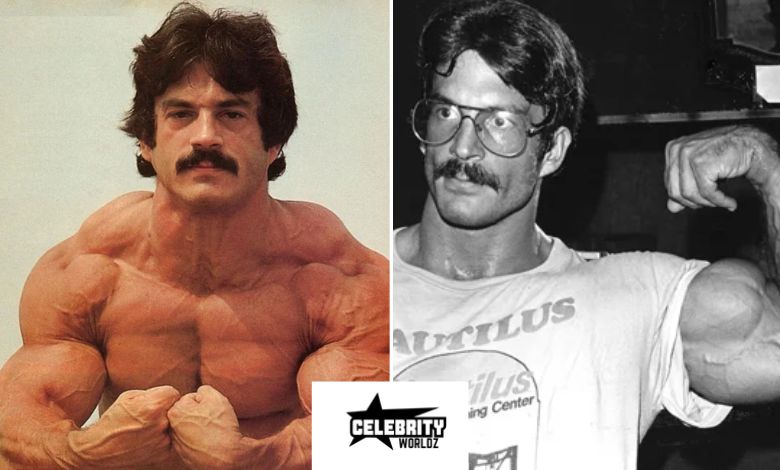
Mike Mentzer was one of the most interesting and powerful bodybuilders the world has ever seen. People still talk about him today because his ideas were bold, different, and way ahead of their time. When you hear the phrase Mike Mentzer Workout Routine, you are really hearing the story of a man who changed bodybuilding forever.
- Quick Bio
- Who Was Mike Mentzer?
- Becoming a Champion Bodybuilder
- The Heavy Duty System — The Heart of the Mike Mentzer Workout Routine
- 1. High Intensity (Train to Failure)
- 2. Low Volume (Very Few Sets)
- 3. Low Frequency (Train Less, Grow More)
- 4. Strict Form & Slow Reps
- 5. Progressive Overload (Always Aim to Improve)
- Why Mike Followed These Ideas — The Influence of Arthur Jones
- The Mike Mentzer Workout Routine — Simple Breakdown
- Day 1 — Chest & Back
- Day 2 — Rest
- Day 3 — Legs, Shoulders, Arms
- Day 4 — Rest
- Day 5 — Repeat Day 1
- Days 6 & 7 — Rest
- Sample Exercises Used in His Routine
- Mike Mentzer’s Diet & Nutrition Philosophy
- Health, Stress, and His Final Years
- Mike Mentzer Height and Weight
- Mike Mentzer Net Worth and Income Sources
- Why the Mike Mentzer Workout Routine Still Works Today
- The Role of Recovery — The Secret Behind His Success
- The Philosophy Behind His Training — Mind and Body Together
- Dorian Yates — The Proof That Heavy Duty Works
- Understanding the Pre-Exhaust Method
- Strict Form — A Big Part of His Training Style
- Common Mistakes People Make With the Routine
- Mistake 1: Not Training Hard Enough
- Mistake 2: Not Resting Long Enough
- Mistake 3: Adding Too Many Sets
- Mike Mentzer’s Personal Life and His Final Years
- The Legacy of Mike Mentzer
- Final Thoughts — Why You Should Try the Mike Mentzer Workout Routine
- FAQs
- 1. Was Mike Mentzer right?
- 2. Did Mike Mentzer win Olympia?
- 3. Is Mike Mentzer alive?
- 4. How did Mike Mentzer train?
- 5. Who did Mike Mentzer train?
- Disclaimer
He was known for his Heavy Duty training method — a style built around short, intense, and very focused workouts. Mike believed that you did not need long two-hour gym sessions. Instead, he taught that high intensity, low volume, and long rest were the real keys to muscle growth.
Quick Bio
| Category | Details |
|---|---|
| Full Name | Michael John Mentzer |
| Known For | Heavy Duty Training, High-Intensity Bodybuilding |
| Profession | Bodybuilder, Author, Fitness Coach |
| Date of Birth | November 15, 1951 |
| Place of Birth | Philadelphia, Pennsylvania, USA |
| Died | June 10, 2001 |
| Cause of Death | Cardiovascular disease (heart failure) |
| Height | 5 ft 8 in (1.73 m) |
| Weight (Contest) | 225 lbs (102 kg) |
| Net Worth (Estimated) | $1M – $2M |
| Source of Wealth | Bodybuilding, Books, Coaching, Heavy Duty Training Courses, Clothing Brand (MYM) |
| Major Titles | Mr. Universe 1978 (Perfect Score), Mr. Olympia Heavyweight Champion 1979 |
| Training Style | High-Intensity Training (HIT), One-Set-to-Failure, Low Volume, Low Frequency |
| Influenced By | Arthur Jones, Objectivist Philosophy |
| Famous Clients | Dorian Yates |
| Family | Brother: Ray Mentzer |
| Education | University of Maryland (Pre-Med Studies) |
| Legacy | Pioneer of science-based bodybuilding, mentor to top athletes, creator of Heavy Duty principles |
Who Was Mike Mentzer?
Mike Mentzer was born on November 15, 1951, in Philadelphia, Pennsylvania. He started lifting weights when he was only 11 years old. He was small then — just 95 pounds — but he had big dreams. He would look at magazine covers and imagine having a strong, powerful body like the great bodybuilders of that time.
His father bought him his first set of weights, and Mike followed a basic routine from the instruction booklet. Even as a teenager, he trained with focus and discipline. By age 15, he could bench press 370 pounds — an incredible number for someone so young.
Mike also studied very hard in school. He got top marks and even started pre-med studies at the University of Maryland. Subjects like genetics, organic chemistry, and physical chemistry shaped his scientific way of thinking. Many people believe this is why his training method later became so logical and precise.
READ ALSO: Vladislava Galagan – The “Kendall Jenner of Bodybuilding” | Age, Height, Workout, Diet & Bio
Becoming a Champion Bodybuilder

Mike started competing in bodybuilding shows at age 18. His early contests helped him learn how the sport worked. In 1976, he won Mr. America. In 1978, he won Mr. Universe, becoming the first bodybuilder to earn a perfect score of 300.
By 1979, he was one of the strongest stars in the sport. He won the Mr. Olympia Heavyweight Division, again with a perfect score. Even though he lost the overall title to Frank Zane, fans still remember this year as one of his best.
In 1980, Mike placed fourth in the Mr. Olympia — a result many people still see as controversial because Arnold Schwarzenegger returned from acting and was given the win. This contest was so frustrating for Mike that he retired from bodybuilding at only 29 years old.
But his ideas and his training system lived on.
The Heavy Duty System — The Heart of the Mike Mentzer Workout Routine
Mike Mentzer did not just train hard — he trained smart. His routine, known as Heavy Duty, became famous for being very different from traditional bodybuilding.
Here are the key ideas behind the Mike Mentzer Workout Routine:
1. High Intensity (Train to Failure)
Mike believed every working set must be pushed until you cannot do another rep with good form. This moment is called momentary muscular failure.
He used special tools to go beyond failure:
- forced reps
- negative reps
- rest-pause reps
- static holds
This level of intensity was the reason he said you only needed one working set per exercise.
2. Low Volume (Very Few Sets)
Unlike bodybuilders who did 20–30 sets per session, Mike recommended 1–2 working sets for each exercise.
He often said:
“If the intensity is high, the volume must be low.”
He believed more sets do not equal more muscle. Instead, too much volume stops recovery and slows growth.
3. Low Frequency (Train Less, Grow More)
Because the workouts were so intense, Mike insisted that the body needed 4–7 days of rest before training the same muscle group again.
Sometimes he even recommended training a muscle group once every 10 days.
In today’s fitness world, people call this “smart recovery.” But Mike was teaching it in the 1970s.
4. Strict Form & Slow Reps
Mike hated sloppy reps. He used a slow, controlled movement pace:
- 2–4 seconds up
- 2–4 seconds down
This kept tension on the muscle and reduced injury risk.
5. Progressive Overload (Always Aim to Improve)
Mike believed muscle growth only happens when the muscle does more than before.
This means:
- lifting more weight
- or doing more reps
This simple idea is one of the most important parts of the Mike Mentzer Workout Routine today.
Why Mike Followed These Ideas — The Influence of Arthur Jones
Mike was greatly influenced by Arthur Jones, the creator of Nautilus machines and the father of High-Intensity Training (HIT). Jones believed in strict form, slow reps, and training to total failure.
Mike studied Jones’s ideas, improved them, and created his own philosophy. Many athletes say Mike took HIT to a higher level — turning it into a science.
Later, he even trained Dorian Yates, who went on to win six Mr. Olympia titles. Dorian credited Mike’s Heavy Duty principles for helping him build his massive, grainy, thick physique.
The Mike Mentzer Workout Routine — Simple Breakdown
Mike’s routine was usually done across two or three days, with rest days in between.
Here is a simple example:
Day 1 — Chest & Back
Day 2 — Rest
Day 3 — Legs, Shoulders, Arms
Day 4 — Rest
Day 5 — Repeat Day 1
Days 6 & 7 — Rest
This sounds very light on paper, but the sessions were extremely intense. Because each set went to failure, the body needed long recovery times.
Sample Exercises Used in His Routine
Mike often used supersets to “pre-exhaust” the muscle. Here is how he trained:
Chest
- Dumbbell Flye → Incline Barbell Press (superset)
Back
- Close-Grip Palms-Up Pulldown → Barbell Row (superset)
Legs
- Leg Extension → Squats (superset)
Shoulders
- Dumbbell Lateral Raise → Machine Shoulder Press (superset)
Arms
- Barbell Curl
- Triceps Pressdown → Dips (superset)
Each exercise normally had one all-out set of 6–10 reps.
Before that, he always did 1–3 warm-up sets to protect the joints.
Mike Mentzer’s Diet & Nutrition Philosophy
Mike believed in balanced eating. He did not support extreme diets.
His recommendations were simple:
- 50–60% carbs
- moderate protein
- moderate fats
- food from all major food groups
He believed most bodybuilders ate too much protein. He used science to show that the body did not need huge amounts to build muscle.
Health, Stress, and His Final Years
Mike Mentzer passed away in June 2001 at age 49. His official cause of death was cardiovascular disease, specifically heart failure.
His passing shocked the bodybuilding world and reminded many athletes that heart health must always come first, even for strong, fit people.
Today, many lifters still study his work because he was not only a bodybuilder — he was also a thinker, a philosopher, and a man who questioned everything.
Mike Mentzer Height and Weight

Mike Mentzer had a powerful and balanced look that made him stand out on any bodybuilding stage. His height was 5 ft 8 in (1.73 m), which may seem average, but his structure made his physique look big, full, and very strong. Many fans said he looked much taller when he stood on stage because of his broad chest and thick muscle density.
His contest weight was around 225 pounds (102 kg). This was an impressive number, especially for the 1970s and 1980s, when bodybuilders were not as massive as today’s athletes. Mike had dense, heavy muscle that came from high-intensity training, slow reps, and strict form. Even off-season, he stayed close to his competition weight because he believed in a clean and balanced diet. His build became one of the most iconic physiques in bodybuilding history — thick arms, a deep chest, strong legs, and a wide back created through Heavy Duty training.
Mike Mentzer Net Worth and Income Sources
Mike Mentzer had several income sources during his career. His estimated net worth at the time of his passing in 2001 was believed to be in the range of $1 million to $2 million, based on contest earnings, business ventures, coaching, and book sales. While bodybuilding contests in his era did not pay as much as today, Mike earned strong recognition through his Mr. Universe and Mr. Olympia wins, which helped him build a stable and long-lasting career.
A large part of his income came from his training programs, especially the Heavy Duty system. Mike sold training courses, audio programs, and books through fitness magazines, and they became extremely popular worldwide. Many people bought these programs because his routine was simple, effective, and backed by science and philosophy. His books — especially High-Intensity Training the Mike Mentzer Way — continue to sell even today.
He also earned through personal coaching, teaching athletes how to use his high-intensity method. One of his biggest coaching successes was training Dorian Yates, who later became a six-time Mr. Olympia champion.
Mike also helped create a clothing brand named MYM (Mentzer Yates Mentzer) with his brother Ray and Dorian Yates. This brand sold Heavy Duty-inspired gym clothes and became another income stream.
Why the Mike Mentzer Workout Routine Still Works Today
Many people still use the Mike Mentzer Workout Routine today because it fits well with real life. Not everyone can spend hours in the gym. Mike’s plan gives you a strong, simple way to train without wasting time.
The routine also helps people who feel tired or stuck from high-volume training. Instead of doing 20 sets per muscle, Mike teaches you to do one powerful set and then rest. This makes training feel fresh and exciting, and many people say they gain more strength than ever before.
Another reason his routine stays popular is that science now supports many of his ideas. Studies show that intensity, recovery, and progressive overload matter more than long workouts. Mike talked about these ideas in the 1970s, long before they became mainstream.
The Role of Recovery — The Secret Behind His Success
One of the most important lessons from Mike Mentzer is the power of recovery. He believed that the muscle grows outside the gym, not inside it. This means you must give your body enough time to repair and grow after each intense session.
Mike understood something many lifters forget: muscles need rest, your nervous system needs rest, and your whole body needs rest. This is why the Mike Mentzer Workout Routine uses long rest days and trains each muscle only once every 4–7 days.
For example, after a brutal set of squats taken to true failure, the body may need five full days to recover. Mike said that rushing back into the gym too soon only makes progress slower. He preferred smart training over frequent training.
And his results proved it worked.
The Philosophy Behind His Training — Mind and Body Together
Mike was not just a bodybuilder. He was also a deep thinker. He loved reading philosophy books, especially those by Ayn Rand, the author of Atlas Shrugged and The Fountainhead. Mike followed Objectivism, a philosophy that focuses on logic, reason, and personal responsibility.
He believed that training and thinking were connected. He said:
“The body and mind are one. Train the body with logic. Live your life with reason.”
This is why his training plan was so structured and scientific. He wanted every rep to count. He wanted every movement to have a clear purpose. Even things like slow reps, strict form, and perfect control came from his belief in discipline and logic.
His training routine was not random. It followed a clear system, just like a science experiment.
Dorian Yates — The Proof That Heavy Duty Works
One of the best examples of Mike’s influence is Dorian Yates, the six-time Mr. Olympia champion. Dorian trained with Mike in the late 1980s and early 1990s. He learned how to push a single set to deep failure. He learned how to focus on intensity instead of volume.
Dorian later said that Mike’s Heavy Duty system helped him build the dense, thick, grainy look that made him unbeatable. Many fans call Dorian the strongest proof that the Mike Mentzer Workout Routine truly works.
Even today, Dorian teaches younger athletes how to use high-intensity training the right way.
Understanding the Pre-Exhaust Method
One key part of Mike’s training was pre-exhaustion. This means training a muscle with an isolation exercise first, then hitting it again with a heavy compound movement.
For example:
- Dumbbell Flye → Press
- Leg Extension → Squat
- Lateral Raise → Shoulder Press
This method forces the muscle to work harder during the compound lift because the smaller muscles are already tired.
Mike liked this method because it created deep muscle fatigue very fast. It also helped lifters feel the target muscle better.
Many modern trainers still use pre-exhaust in their programs today.
Strict Form — A Big Part of His Training Style
Mike believed that every rep should look perfect. He used a slow and steady pace to make sure the muscle stayed under tension.
His usual tempo was:
- 2–4 seconds lifting
- 2–4 seconds lowering
This simple approach does two things:
- It makes the muscles work harder.
- It protects the joints from injury.
Many people who follow the Mike Mentzer Workout Routine today say strict form helped them feel their muscles better than ever before.
Common Mistakes People Make With the Routine
Even though Mike’s routine is simple, many people make mistakes when trying it. Here are a few:
Mistake 1: Not Training Hard Enough
If you do not reach true muscular failure, the routine will not work as well.
Mistake 2: Not Resting Long Enough
Some people ignore the rest days because they fear losing progress. But rest is part of the routine.
Mistake 3: Adding Too Many Sets
People often add extra sets “just to feel more pumped.” Mike warned that this would stop growth.
When the routine is followed correctly, it becomes one of the most efficient training systems in the world.
Mike Mentzer’s Personal Life and His Final Years
Mike’s life was not only about training. He wrote books, taught many clients, and worked on bodybuilding philosophy. He became a respected voice in the fitness world.
Sadly, his life ended early. On June 10, 2001, Mike Mentzer died at age 49 from cardiovascular disease, specifically heart failure. His younger brother Ray passed away two days later from another illness.
Mike’s death shocked fans everywhere. It also made many athletes realize that even strong bodies need proper heart care. Training hard is important, but health is more important.
The Legacy of Mike Mentzer
Even today, people around the world follow the Mike Mentzer Workout Routine. His Heavy Duty system still appears in fitness books, YouTube videos, and gym programs.
Mike changed the way many people think about muscle growth. He showed that:
- intensity matters
- recovery matters
- logic matters
- discipline matters
He proved that a short, smart workout can build more muscle than a long, draining one. And he inspired lifters like Dorian Yates, who carried his ideas into the modern era.
Mike’s work lives on through his books, his interviews, and the countless athletes who use Heavy Duty training today.
Final Thoughts — Why You Should Try the Mike Mentzer Workout Routine
If you want a simple, powerful, and time-saving way to train, the Mike Mentzer Workout Routine is one of the best methods to try. It teaches you how to train hard, train smart, and respect rest.
You do not need hours in the gym. You only need focus, intensity, and discipline. Mike proved that one perfect set can be more effective than twenty average sets.
His message is clear:
Train with purpose. Rest with purpose. Grow with purpose.
And that message still inspires lifters all over the world today.
READ ALSO: Ronnie Coleman Net Worth, Life Story & Full Updated Biography
FAQs
1. Was Mike Mentzer right?
Many experts today believe that Mike Mentzer was right about several key ideas. Modern studies show that intensity, not endless volume, is what drives real muscle growth. Research also supports his ideas about recovery, training to failure, and low-volume workouts. His Heavy Duty system was ahead of its time and still influences training programs today.
2. Did Mike Mentzer win Olympia?
Mike Mentzer did not win the overall Mr. Olympia title, but he won the 1979 Mr. Olympia Heavyweight Division with a perfect score. He lost the overall title to Frank Zane. The 1980 Mr. Olympia, where he placed 5th, remains one of the most debated contests in bodybuilding history.
3. Is Mike Mentzer alive?
No. Mike Mentzer passed away on June 10, 2001, at the age of 49. His cause of death was heart failure (cardiovascular disease). His younger brother Ray Mentzer passed away two days later due to complications from Berger’s disease.
4. How did Mike Mentzer train?
Mike Mentzer trained using his famous Heavy Duty method. His system included:
- One all-out set to failure
- Very slow and controlled reps
- Low workout volume
- Training each muscle only once every 4–7 days
- Progressive overload
- Techniques like forced reps, negatives, and rest-pause
His workouts were short, brutal, and extremely focused.
5. Who did Mike Mentzer train?
Mike Mentzer trained many athletes, but his most famous student was Dorian Yates, who went on to win six Mr. Olympia titles. Yates openly credits Mike’s Heavy Duty principles for shaping his own high-intensity training style. Mike also coached many bodybuilders, beginners, and fitness fans through books, courses, and personal training.
Disclaimer
The information in this article is based on publicly available sources and online references. Some details may be unverified or subject to change. This content is for informational and educational purposes only and does not claim to represent official facts.